


Our story
Why should the finest mithaiwait for a festival?
I.
A sweetness we grew up with
In Indian homes, a box of mithai is never just food. It is a greeting at the door, the first thing offered after good news, the quiet way a family says we thought of you.
Date-and-nut sweets have always held a special place in that tradition — rich, unhurried, made from things the pantry already treasured.

“We kept what matters — dates, whole nuts, a patient hand — and let go of the rest.”
The NutKhati kitchen
II.
Reimagined for the everyday
NutKhati began with a simple thought: the mithai we save for celebrations could belong to ordinary days too — if it were made to fit them.
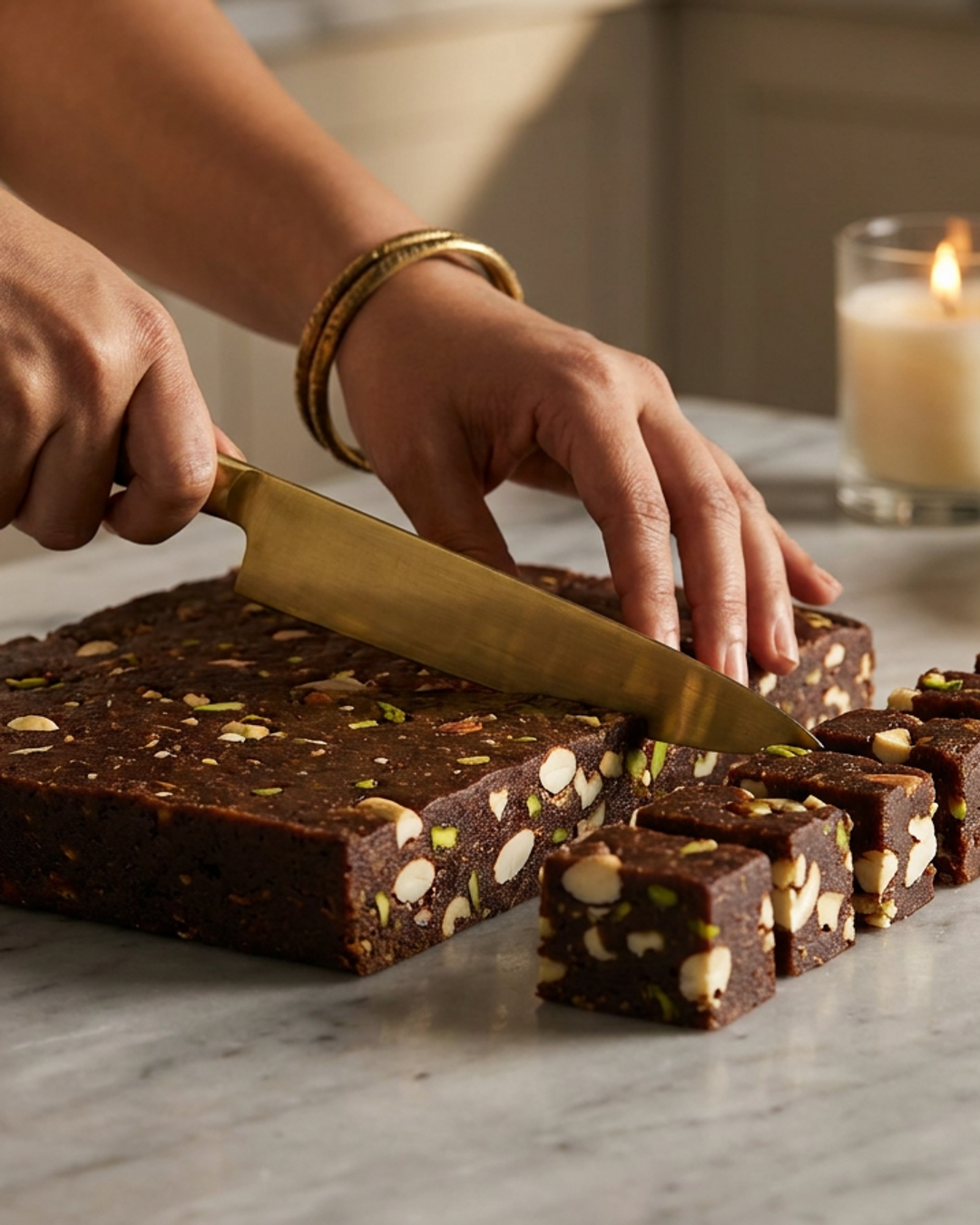
So we set it in a slab and cut it into neat, bite-sized squares. Dense enough to fill you, small enough to carry, beautiful enough to offer. One with the morning coffee. One before the gym. One for whoever walks in.
III.
Dressed like a keepsake
Our box borrows the deep royal blue and gold of Indian celebration — and the restraint of a European pâtisserie. A gold-lined tray, a clean seal, nothing loud.
It is meant to be opened slowly, and kept for whatever comes next.

What we hold to
The house rules
01
Real ingredients, named
Dates, anjeer, three nuts, four seeds and ghee. If it's in the box, it's on the box.
02
Cut by hand
Every square is cut by hand, so every piece carries its own mosaic.
03
Made to be given
Our boxes are designed to be kept long after the last piece is gone.
04
Honest words
No borrowed history, no invented praise. We'd rather you taste it and decide.

Taste it, then decide.
Start with the Petite Box — four squares, one evening, and you'll know.